
LED Light Applications for Custom Illuminated Signage
LED lighting is an essential part of modern illuminated sign manufacturing. From commercial storefront letters and architectural signage to light boxes and custom brand displays, the right LED lighting solution can affect brightness, light uniformity, energy consumption, installation methods, and long-term performance.
However, different LED lighting solutions are suitable for different product structures and applications. LED strips, LED modules, and LED embedded lighting each have their own characteristics in terms of construction, installation, and design applications.
For sign manufacturers, advertising companies, brand design agencies, and project contractors, understanding the differences between these lighting solutions can help optimize product design and improve the overall quality of illuminated signage.
This article introduces the basic characteristics, common applications, selection criteria, and quality control requirements of LED strips, LED modules, and LED embedded lighting to help you choose the right lighting solution for your custom illuminated signage projects.
1. What Are LED Strips, LED Modules, and LED Embedded Lighting?
These three terms are sometimes used interchangeably, but they refer to different product types or installation methods.
In custom illuminated sign manufacturing, LED strips, LED modules, and LED embedded lighting are suitable for different product structures and operating environments. Choosing the right LED lighting solution affects not only brightness and uniformity but also waterproof performance and design feasibility.
1.1 LED Strip
LED strips are primarily used for indoor illuminated signage. They are suitable for linear lighting applications in specific structures. However, this solution is not waterproof and should be avoided in outdoor environments or locations exposed to rain or moisture.

Common applications:
Indoor custom illuminated letters
Indoor brand signage and decorative lighting
Indoor illuminated signs designed for LED strip installation
Minimum stroke width: The minimum stroke width for indoor applications should be at least 8 mm. Actual feasibility should be evaluated based on the font, letter structure, and design files.
1.2 LED Module
LED modules use waterproof lighting solutions suitable for outdoor applications. They are commonly used in metal illuminated letters, light boxes, and outdoor illuminated signage.
For projects exposed to outdoor conditions, the overall sign structure, installation method, and electrical connections must be designed to ensure that the finished product meets the required waterproof performance.
Common applications:
Metal illuminated letters
Illuminated light boxes

Outdoor illuminated signage
Other custom illuminated products with metal housings
Minimum stroke width: The minimum stroke width for outdoor waterproof LED module applications should be at least 12 mm to provide sufficient space for LED installation and internal structural requirements.
1.3 LED Embedded Lighting

LED embedded lighting is primarily used for illuminated letters made entirely from acrylic. It integrates the lighting structure with the acrylic letter body, making it suitable for custom signage that requires a seamless acrylic appearance and illuminated effect.
This solution can be used for both indoor and outdoor projects. For outdoor applications, the product structure, material joints, and sealing process must be properly designed to ensure that the finished product meets the required waterproof performance.
Common applications:
Full acrylic illuminated letters
Custom acrylic brand signage
Outdoor waterproof illuminated letters made from an all-acrylic structure
Minimum stroke width: The minimum stroke width for outdoor waterproof LED embedded applications should be at least 12 mm. Actual feasibility requires engineering evaluation based on the font, letter dimensions, and internal structure.
Explore YIJIAO's Custom Illuminated Letters & Logos to see different lighting styles and customized letter constructions.
2. Comparison of Three LED Lighting Solutions
The following table compares LED strips, LED modules, and LED embedded lighting in terms of applications, waterproof performance, minimum stroke width, and design considerations.
Comparison | LED Strip | LED Module | LED Embedded |
Primary application | Indoor | Outdoor waterproof applications | Indoor and outdoor waterproof applications |
Waterproof performance | Not waterproof | Waterproof LED modules | Can achieve outdoor waterproof performance with appropriate structural design |
Common products | Indoor illuminated signage | Metal illuminated letters, light boxes, outdoor illuminated signage | Full acrylic illuminated letters |
Minimum stroke width | 8 mm | 12 mm | 12 mm |
Key selection factors | Indoor environment and installation space | Module layout, metal structure, and waterproof design | Acrylic structure, lighting integration, and sealing design |
Important note: The minimum stroke widths above are preliminary design requirements and do not guarantee that every font or size can be manufactured directly.
Actual feasibility must be confirmed based on the design files, letter structure, product dimensions, and lighting layout. Waterproof performance also depends on the overall product structure, sealing process, and electrical connections, rather than the LED light source alone.
3. How to Choose the Right LED Solution for Custom Illuminated Signage
Indoor Illuminated Letters: LED Strip
If the project is intended exclusively for indoor use and the stroke width is at least 8 mm, an LED strip solution can be considered.
Since this solution is not waterproof, it should not be used outdoors or in locations where water ingress is possible.
Metal Illuminated Letters and Outdoor Light Boxes: LED Module
For metal illuminated letters, light boxes, and outdoor illuminated signage, waterproof LED modules are a suitable option to consider.
The stroke width should be at least 12 mm, and the LED layout should be designed according to the letter shape and product structure to achieve suitable brightness and uniformity.
For related product structures, explore YIJIAO's Custom Light Boxes and Back-Lit Letters & Halo-Lit Signs.
Full Acrylic Illuminated Letters: LED Embedded
For letters made entirely from acrylic, an LED embedded solution can be considered.
For outdoor applications, the stroke width should be at least 12 mm. The overall structure, sealing method, and electrical protection requirements should also be confirmed during the design stage.
4. Key Parameters to Confirm Before Designing Illuminated Signage
Before selecting an LED lighting solution, the following information should be confirmed:
Installation environment: Indoor or outdoor use, including exposure to rain or moisture.
Product structure: Metal illuminated letters, light boxes, or full acrylic illuminated letters.
Minimum stroke width: At least 8 mm for indoor LED strip applications and at least 12 mm for outdoor waterproof LED module and LED embedded applications.
Lighting effect: Front lighting, side lighting, or other custom lighting effects.
Product dimensions and font: Letter height, stroke proportions, and available internal installation space.
Waterproof requirements: Confirm the required protection rating and evaluate whether the overall product structure can meet it.
At YIJIAO, we evaluate custom illuminated signage based on design files, materials, installation environments, and lighting requirements. This helps customers determine a suitable LED solution during the design stage.
If you are developing a new illuminated signage project, you can provide your design files, product dimensions, installation environment, and desired lighting effect so that we can assess structural feasibility and manufacturing requirements.
5. What Factors Should Be Considered When Choosing LED Lighting for Signage?
Selecting LED lighting involves more than comparing price, power consumption, or the number of LEDs. The following factors also affect the final product's performance.
5.1 Brightness and Light Uniformity
The required brightness depends on the product dimensions, viewing distance, ambient lighting, panel material, and application.
If the LEDs are spaced too far apart, visible bright spots and dark areas may appear. If the light source is too concentrated, localized overbrightness or glare may occur.
To improve light uniformity, consider LED spacing, installation depth, optical design, panel diffusion properties, and mounting positions.
5.2 Color Temperature and Color Consistency
White LEDs are available in different color temperatures, and some projects may require RGB or other color-changing lighting systems.
For projects involving multiple letters or signs, LED color consistency is particularly important. LEDs from different batches or with different specifications may produce visible color variations.
Therefore, the color temperature, lighting color, and relevant specifications should be confirmed before production, especially for projects with strict brand color requirements.
5.3 Operating Voltage and Power Supply Configuration
The LED lighting system must be compatible with the specified power supply and electrical configuration.
During the design stage, confirm:
The rated operating voltage of the LEDs
The total system load
Power supply capacity and compatibility
Wiring methods and connection requirements
Whether dimming or control functions are required
Electrical components should be selected and installed according to product specifications, project requirements, and applicable electrical standards.
5.4 Heat Dissipation
LEDs generate heat during operation. If the heat cannot dissipate effectively, operating temperatures may rise and affect long-term performance.
Heat dissipation is particularly important for enclosed illuminated letters, compact embedded lighting systems, and signs with high LED density.
The design should consider LED power, installation density, the thermal properties of surrounding materials, appropriate ventilation where applicable, and the heat dissipation capacity of the overall structure.
5.5 Indoor and Outdoor Applications
Indoor and outdoor signage have different LED lighting requirements.
Outdoor signs may be exposed to rain, humidity, dust, temperature changes, and sunlight for extended periods. Therefore, LED components, wires, connectors, housings, and sealing structures must be suitable for the actual installation environment.
A waterproof LED component does not automatically mean that the entire illuminated sign is waterproof. The final protection level depends on the overall product design and manufacturing quality.
5.6 Installation and Maintenance
The lighting system must not only meet illumination requirements but also allow convenient installation and maintenance.
LED strips and modules must be securely mounted, wiring should be properly arranged, and sufficient access should be provided for inspecting power supplies and other electrical components.
For products that may require future LED or power supply replacement, planning maintenance access in advance can help reduce repair time and minimize damage to the sign structure and surface finish.
6. Common LED Illuminated Sign Problems and Prevention Methods
Even when suitable LED components are selected, lighting problems may still occur if the lighting layout or product structure is poorly designed.
6.1 Uneven Illumination
Possible causes: Inappropriate LED spacing, insufficient installation depth, mismatched optical output, or inadequate light diffusion from the panel.
Prevention: Evaluate the LED layout together with the sign dimensions, internal depth, panel material, and viewing conditions.
6.2 Visible Hotspots
Possible causes: LEDs positioned too close to the illuminated face or insufficient space for light diffusion.
Prevention: Adjust the distance between the light source and the face panel, select suitable optical components, and verify the lighting effect through samples or testing when necessary.
6.3 Insufficient Overall Brightness
Possible causes: Insufficient LED output, excessive spacing between LEDs, low panel light transmission, or an unsuitable power supply configuration.
Prevention: Evaluate the complete lighting system instead of simply increasing the number of LEDs. Confirm the target brightness and panel material specifications before production.
6.4 LED Overheating
Possible causes: Excessive LED installation density, inappropriate power configuration, insufficient heat dissipation, or an unsuitable installation environment.
Prevention: Check the electrical load, LED installation method, housing structure, and heat dissipation requirements during engineering design.
6.5 Water Ingress in Outdoor Signs
Possible causes: Inadequate sealing, insufficient protection at cable entries, or gaps in the housing joints.
Prevention: Inspect the complete sign assembly, including joints, cable entries, connectors, and access panels. Confirm that the protection rating meets project requirements.
6.6 Difficult Maintenance
Possible causes: LED modules, power supplies, or wiring become difficult to access after assembly.
Prevention: Plan component positions, wiring routes, and maintenance access before finalizing the product structure.
7. Quality Control in LED Illuminated Sign Manufacturing
High-quality illuminated signage requires coordination between LED components, metal structures, translucent panels, power supplies, and assembly processes.
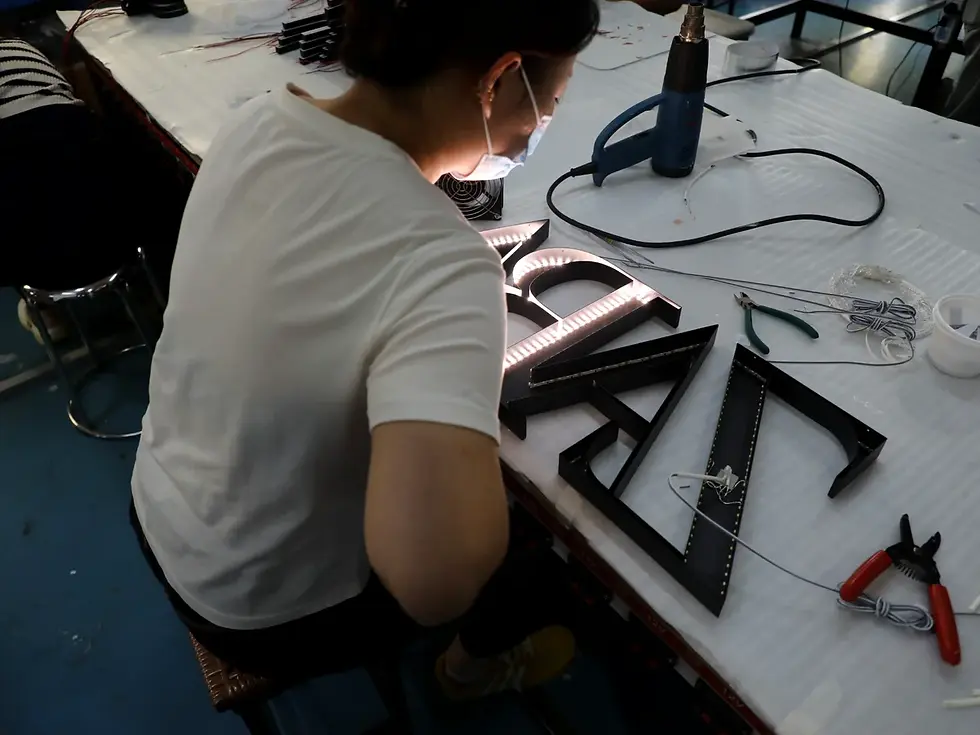
The following items should be checked during manufacturing:
Component specification checks: Confirm that LED strips or modules meet the approved specifications, including operating voltage, color, and application requirements.
Installation checks: Inspect LED positions, mounting methods, electrical connections, and cable routing.
Illumination testing: Power on the product and check overall brightness, color consistency, and the presence of obvious dark areas or hotspots.
Electrical checks: Verify the power supply configuration and electrical connections according to product specifications and applicable requirements.
Protection checks: For outdoor products, inspect sealing and structural details related to the specified protection rating.
Final appearance inspection: Check the illuminated face, edges, housing, and surface finish to ensure there is no obvious damage or assembly defects.
Before shipment, products should be tested according to the product design and the project requirements agreed upon by both parties.
8. What Information Is Needed for a Custom LED Sign Quotation?
If you are sourcing custom illuminated signage, providing complete project information helps the manufacturer recommend a suitable lighting and fabrication solution.
8.1 Design Files and Dimensions
Provide AI, EPS, PDF, CAD files, or reference images. Include the overall dimensions, letter height, thickness, depth, and other critical measurements.
8.2 Desired Lighting Effect
Specify whether the product requires front lighting, backlighting, side lighting, edge lighting, linear illumination, or another custom effect.
Reference images can also be provided to help the manufacturer understand the expected result accurately.
8.3 Materials and Structure
Specify the materials used for the illuminated face, letter returns, back panel, frame, and other structural components.
For custom products, the available internal space directly affects LED selection and installation positions.
8.4 Indoor or Outdoor Installation
Specify the installation environment and whether there are particular requirements for protection ratings, mounting methods, or electrical configurations.
8.5 Order Quantity and Delivery Location
Provide the required quantity, delivery destination, and expected delivery date so the manufacturer can evaluate pricing, production scheduling, packaging, and shipping arrangements.
The more complete the information, the easier it is for the engineering team to evaluate the product structure, lighting requirements, and manufacturing process and provide a more accurate quotation.
Explore YIJIAO's Custom Signage Solutions to learn more about our illuminated signage products and manufacturing services.
Frequently Asked Questions About LED Lighting for Signage
1. What Is the Difference Between an LED Strip and an LED Module?
An LED strip is a linear lighting product with LEDs arranged along a flexible circuit board, while an LED module is an independent lighting unit that can be positioned individually. The appropriate choice depends on the sign structure, product dimensions, and lighting requirements.
2. What Is LED Embedded Lighting?
LED embedded lighting is an installation method in which a light source is integrated into a recess, profile, or sign structure. The light source can be an LED strip, an LED module, or another compatible lighting component.
3. Which LED Lighting Solution Is Suitable for Illuminated Channel Letters?
LED modules are a common lighting solution for illuminated channel letters because they can be distributed inside the letter housing. However, the final choice depends on the letter depth, stroke width, face material, lighting method, and internal layout.
4. How Should I Choose LED Components for Custom Signage?
Consider brightness, color consistency, operating voltage, power supply capacity, heat dissipation, installation space, environmental protection, and maintenance convenience. LED components should be selected as part of the overall sign design.
5. How Can I Reduce Hotspots in Illuminated Signs?
Hotspots can be reduced by optimizing LED spacing, installation depth, optical output, and panel diffusion properties. The appropriate solution depends on the product dimensions, materials, and desired lighting effect.
+

Comments