
Surface Finishes for Illuminated Signs: Metal and Acrylic Options for Different Brand Styles
Updated: Nov 8
How painting, metallic coatings, brushing, mirror polishing, and acrylic films shape the appearance of custom illuminated signage.
1. Introduction: The Finish Is Part of the Design
When designing illuminated signage, choosing the right lighting method is only one part of the process. The surface finish also plays an important role in defining how a sign looks, feels, and fits into its surroundings.
A polished stainless steel logo can create a clean, premium appearance. A brushed metal letter may communicate understated sophistication, while an antique finish can add character and a sense of heritage. On acrylic signs, painted surfaces and decorative films offer more flexibility in color, texture, and branding.
Different finishes can also interact with illumination in different ways. Some emphasize the metallic appearance of a sign during the day, while others allow light to pass through selected areas or create contrast between illuminated and non-illuminated surfaces.
For brand owners, sign fabricators, architects, and designers, understanding these options makes it easier to select a finish that supports both the visual concept and the intended application.
Choosing the right surface finishes for illuminated signs helps balance brand identity, material appearance, lighting performance, and long-term durability.
2. Metal Surface Finishes for Illuminated Signs
Metal is widely used in custom illuminated letters and logos because it can provide a defined structure, a refined appearance, and a range of decorative surface effects.
The following finishes offer different visual characteristics and design possibilities.
2.1 Painted Metal: Flexible Colors for Brand Identity

Painting is a versatile option for metal sign letters, logos, and decorative components. It allows the surface to be finished in a wide range of colors, making it suitable for projects that require close alignment with a brand's visual identity.
Depending on the selected coating and finish, painted metal can have a matte, satin, or gloss appearance.
Typical applications include:
Retail storefront signage
Restaurant and cafe signs
Corporate logos and reception signage
Shopping mall and commercial displays
Brand-specific custom lettering
Painted metal is particularly useful when the design requires a distinctive color rather than the natural appearance of stainless steel.
For illuminated signs, the relationship between the painted surface and the lighting design should be considered early. If a specific area needs to transmit light, the material structure and finish must be designed accordingly. An opaque paint layer should not be assumed to transmit light.
2.2 Decorative Metallic Coatings: Titanium-Look and PVD Finishes

Decorative metallic coatings are often selected for metal signage that requires a distinctive metallic color.
Common visual options may include gold, black, bronze, and other metallic tones, depending on the coating system and substrate.
This type of finish can help illuminated letters and logos complement premium retail interiors, hotel lobbies, corporate reception areas, and high-end commercial spaces.
Design advantages:
A distinctive metallic color
A more decorative appearance than untreated metal
Options for coordinating signs with interior finishes and brand colors
A suitable visual direction for premium logos and lettering
The final appearance depends on the base material, surface preparation, coating process, and selected finish.
In commercial practice, terms such as titanium plating or titanium-look finish may refer to different decorative coating methods. Certain metallic finishes are produced using PVD processes, while similar visual effects may also be achieved through other coating systems. The exact manufacturing process should be confirmed for each project.
For illuminated signage, the coating is generally selected for the visible metal surface. Lighting effects, such as front illumination or halo illumination, need to be considered separately as part of the sign's construction.
2.3 Antique Finishes: Character and a Sense of History

Antique finishes create a deliberately aged or weathered appearance. Depending on the selected technique, the surface may feature darker recesses, tonal variations, or a patinated visual effect.
Unlike a uniformly polished surface, an antique finish introduces visual texture and character.
Antique finishes can work particularly well when the sign needs to complement traditional architectural materials, warm interior colors, or vintage-inspired brand identities.
Because the effect can vary according to the substrate and finishing method, reference samples should be reviewed before production when consistency across multiple letters or repeat orders is important.
2.4 Mirror Finish: Reflective and Eye-Catching
Mirror-finished metal has a highly reflective surface that can reflect surrounding light, colors, and architectural details.
It is often used when the sign needs a sleek, modern, or luxurious appearance without relying on a large number of decorative elements.
Mirror finishes can be visually striking under both natural and artificial lighting. However, fingerprints, dust, fine scratches, and surface imperfections may be more noticeable on highly reflective surfaces.
When used for illuminated signage, the mirror finish and lighting should be evaluated together. A reflective metal face does not automatically mean that the face itself will transmit light; the illumination method depends on the overall construction.
2.5 Natural Stainless Steel: A Clean, Professional Look
Natural stainless steel retains the recognizable appearance of the metal without adding a decorative color coating.
Its neutral metallic tone works well with modern architecture, minimalist interiors, and corporate branding.
Natural stainless steel can be selected when the design calls for a clean metal finish rather than a colored or highly decorative surface.
The final appearance still depends on the stainless steel grade, surface condition, fabrication, and finishing method. Material selection should also take the installation environment into account.
2.6 Brushed Metal: Subtle Texture and Modern Style
Brushed metal features fine, directional lines across the surface. Compared with a mirror finish, it produces a more restrained reflection and a visible texture.
This makes brushed metal a popular visual choice for projects that require a sophisticated but understated appearance.
The brushing direction can influence how a letter or logo looks under different lighting conditions. For projects involving multiple letters, the direction and consistency of the grain should be considered during fabrication.
Brushed metal can also be combined with different illumination styles, allowing designers to balance the texture of the metal with the brightness and placement of the lighting.
3. Acrylic Surface Finishes for Illuminated Signs
Acrylic offers a different range of design possibilities. It can be used as a light-transmitting face, a decorative surface, or part of a layered sign construction.
Two common approaches to acrylic surface decoration are painting and applying decorative film.
3.1 Painted Acrylic
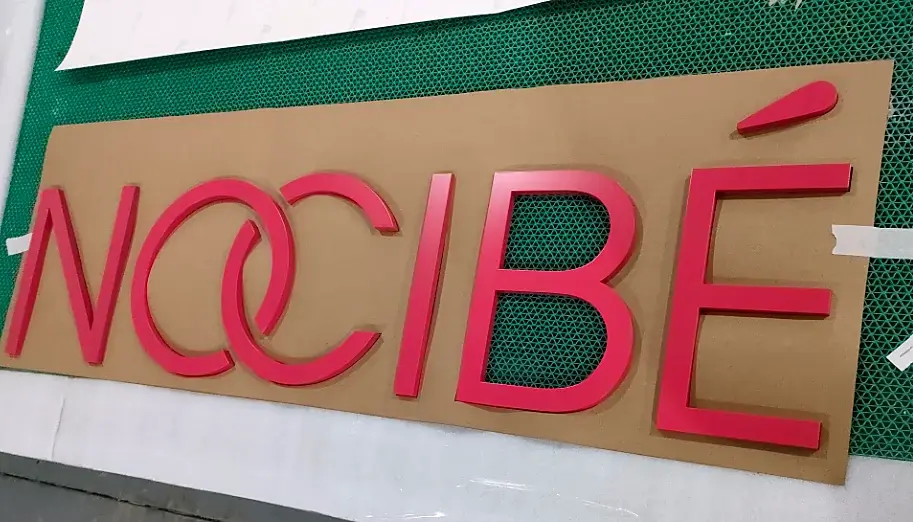
Painting acrylic can create a specific color or surface appearance for custom letters, logos, and sign components.
Depending on the coating system, the finish may be matte, satin, or glossy. This makes painted acrylic useful when the project requires a particular color or a visual match with other design elements.
For illuminated applications, it is important to distinguish between opaque painted areas and areas intended to transmit light. If the acrylic face needs to illuminate, the paint system and the location of the coating must be specified to suit the intended lighting effect.
Paint adhesion and appearance also depend on the acrylic surface preparation and the compatibility of the coating system with the substrate. Samples are recommended when the project requires a precise color or gloss level.
3.2 Acrylic with Decorative Film

Decorative film, including suitable adhesive films, can be applied to acrylic surfaces to achieve selected colors, patterns, or visual effects.
This approach can be useful when the design requires a specific appearance without relying entirely on a painted finish.
Depending on the film selected, possible design directions include:
Solid brand colors
Matte or glossy appearances
Colored or metallic-look effects
Decorative patterns
Contrasting sections within a single sign
Film can also support designs that combine several visual elements on one acrylic face.
However, not every film is suitable for every sign application. Film compatibility, adhesion, edge finishing, cleaning requirements, and exposure to sunlight or moisture should be considered according to the product specification and installation environment.
For illuminated signs, the film's opacity and light-transmission characteristics are especially important. A film that looks correct under normal lighting may produce a different appearance when the sign is switched on. Testing the material with the intended illumination is therefore recommended.
4. Surface Finish and Illumination: Why They Must Be Considered Together
The surface finish and the lighting method should be planned as one design, rather than treated as separate decisions.
For example, a metal letter with decorative metal returns may be paired with a translucent acrylic face for front illumination. An opaque metal-faced letter may instead be designed for halo illumination from behind. Acrylic can be used in areas where light transmission is required, depending on the selected material and construction.
Several questions should be answered before production:
Which parts of the sign should illuminate?
Which parts should remain opaque?
Should the metallic appearance remain the main visual feature during the day?
Will the sign be installed indoors or outdoors?
Does the project require a consistent finish across multiple letters?
How will the finish look when the lighting is switched on and off?
Considering these questions early helps reduce discrepancies between the approved design and the finished sign.
5. Quality Considerations Before Production
A visually attractive sample is only one part of a successful signage project. The finish also needs to be suitable for the sign's structure and intended use.
Before confirming production, it is useful to review the following points:
Surface consistency: Check whether the color, gloss, texture, and brushing direction are consistent across the components.
Material compatibility: Confirm that the selected paint, coating, or film is suitable for the substrate and the intended application.
Illumination performance: Evaluate the appearance of the finish with the actual lighting arrangement, particularly when light transmission is required.
Environmental suitability: Consider indoor or outdoor installation, exposure to moisture and sunlight, and the manufacturer's stated limitations for the selected finish.
Sample approval: For projects with strict brand requirements, approve a representative sample before mass production or a large repeat order.
These checks help align the design intent, material selection, and finished product.
6. Conclusion: Make the Surface Finish Part of the Signage Design
Surface finishing gives illuminated signage much of its visual identity. Painted metal offers flexible color choices; decorative metallic coatings provide gold, bronze, black, and other tones; antique finishes add character; and mirror, natural stainless steel, and brushed finishes offer different interpretations of a metal surface.
For acrylic, painting and decorative film provide additional options for controlling color, texture, and appearance.
There is no single finish that suits every project. The right choice depends on the brand's design language, the desired lighting effect, the installation environment, and the requirements of the sign itself.
At YIJIAO, surface finish selection should be considered alongside the design, material, structure, and illumination requirements of each custom signage project. By defining these elements early, customers and sign professionals can make more informed decisions and work toward a result that meets the intended visual direction.
Request a custom project quote. Project example: oxidized and perforated metal sign project.


Comments